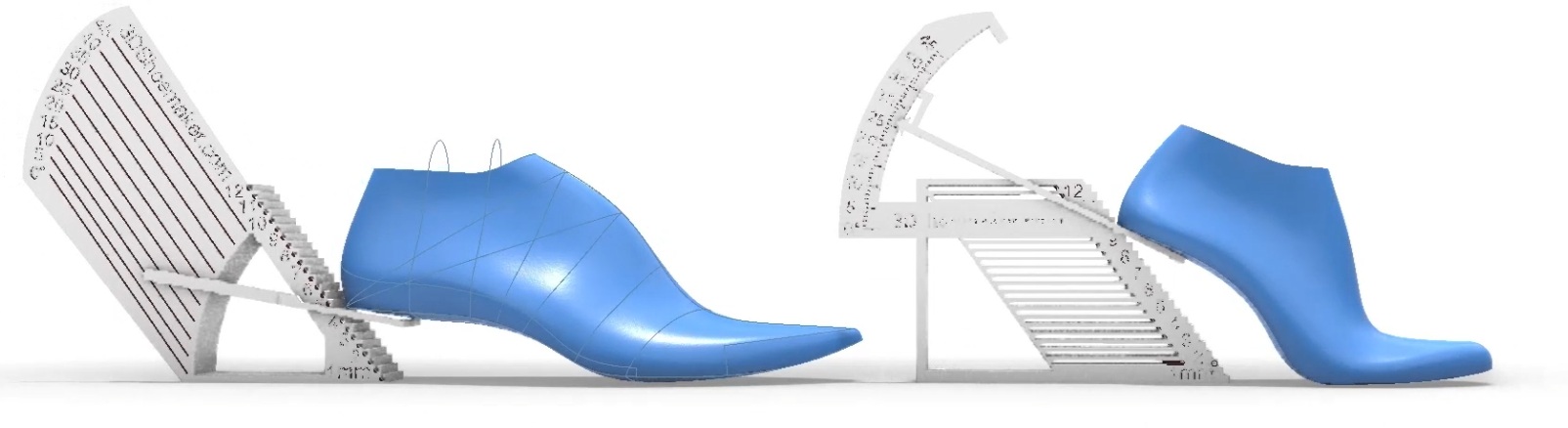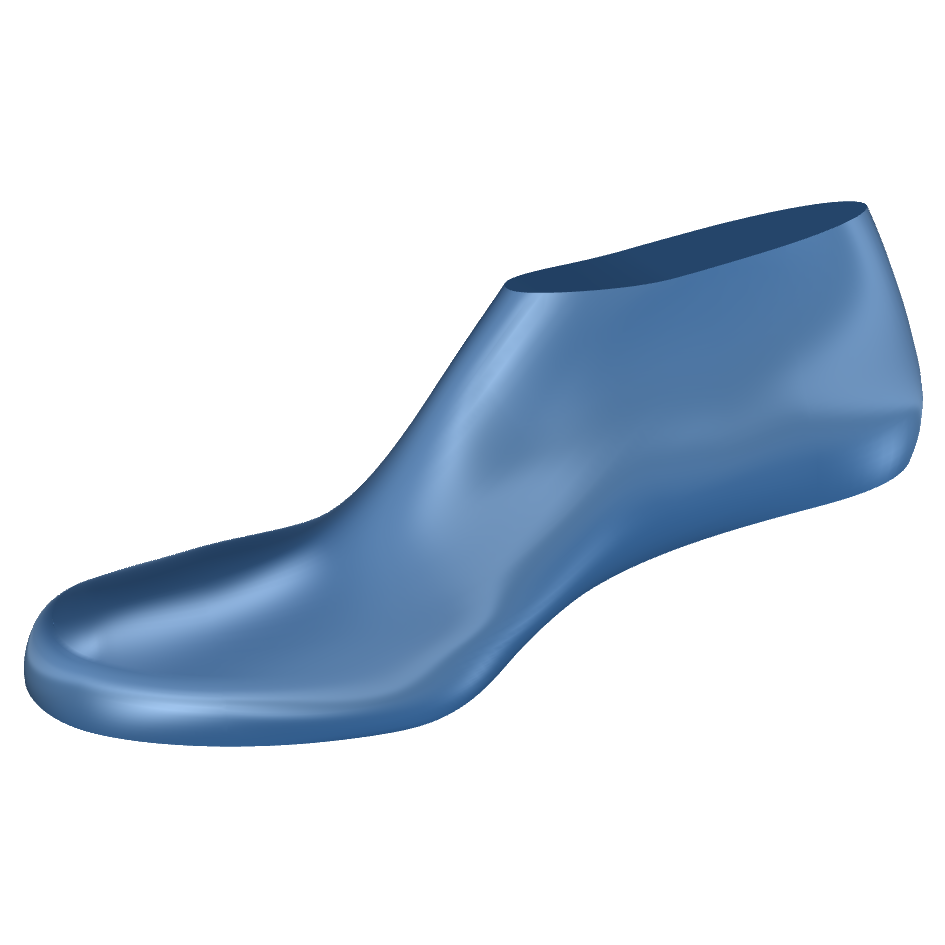
In this 3DShoemaker post I’m going to introduce a novel Heel Height and Wedge Angle Gauge for shoe last measurement. There are two different styles of the gauge and it is available both as a physical 3D print you can have shipped to you and a digital model you can 3D print yourself. The digital model can be purchased or comes complimentary with any digital order on 3DShoemaker.com.
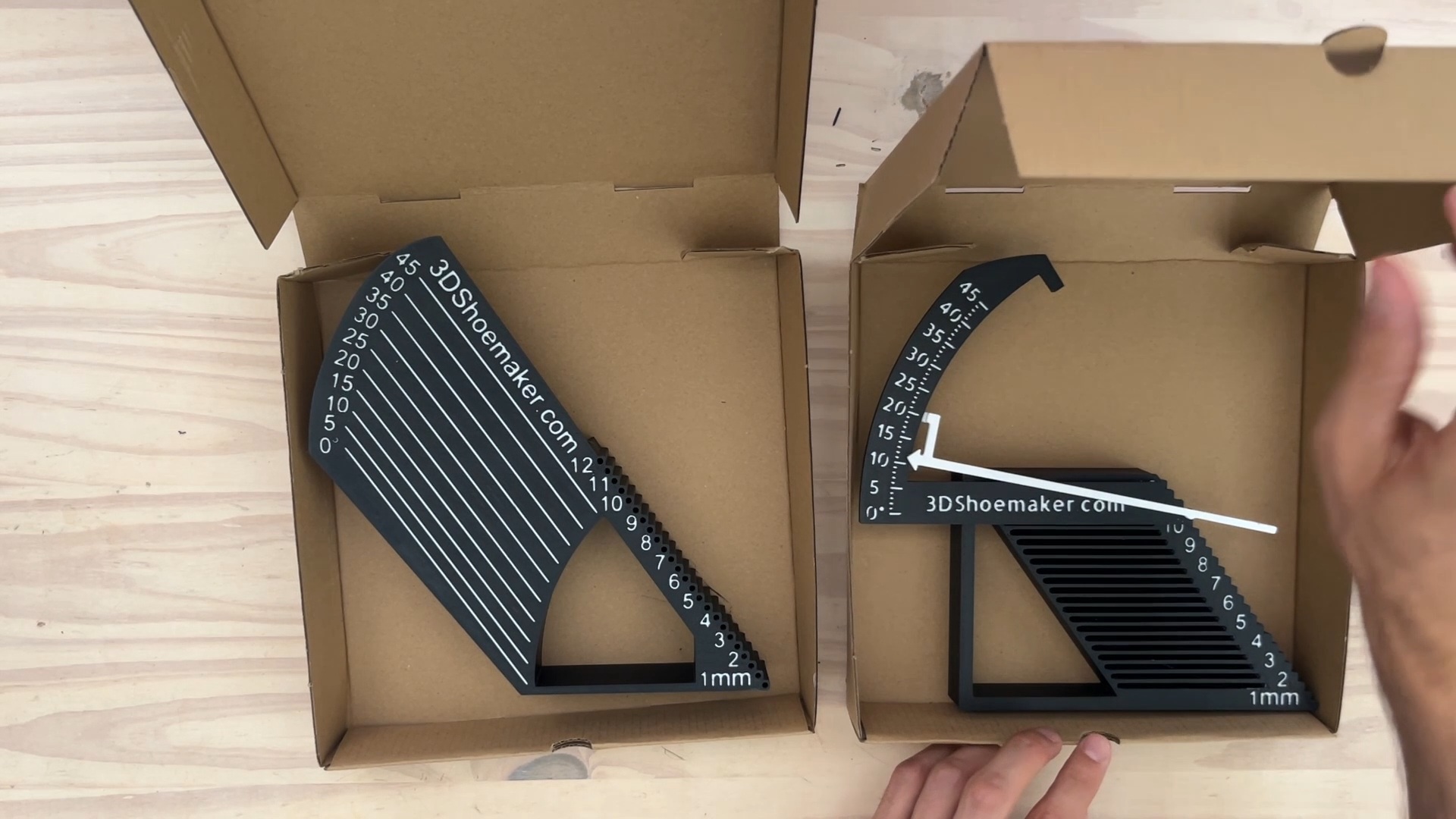
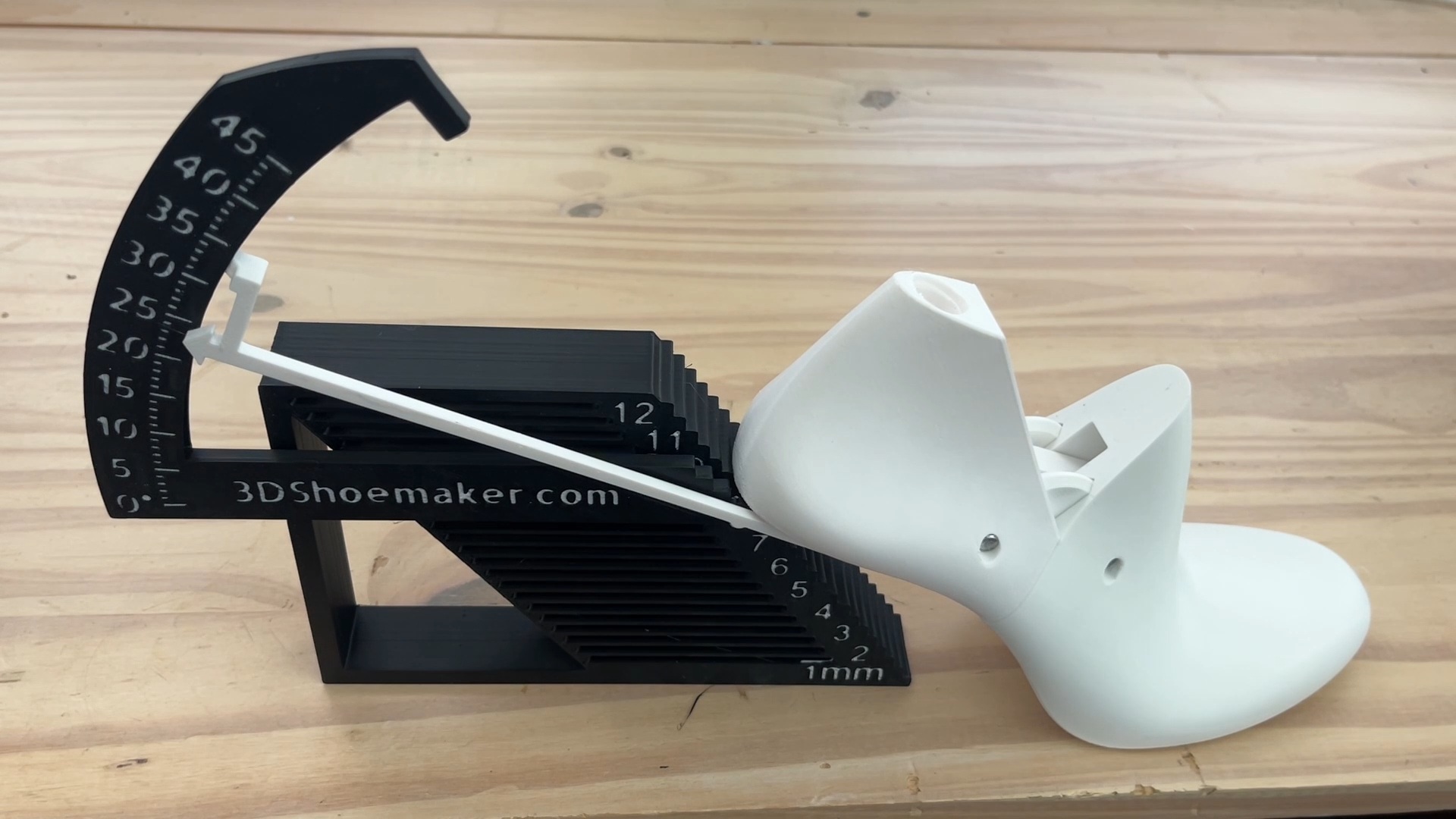
A heel height gauge is an excellent tool for measuring the heel height of a shoe last before embarking on a shoemaking project. But two shoe lasts can have the same heel height and still be entirely different in the heel area, mainly due to wedge angle differences. A protractor can be used to measure wedge angle, but it is somewhat of an awkward affair holding everything in place while the measurement is taken. For this reason, I’ve developed a new gauge that allows heel height and wedge angle to be measured simultaneously.
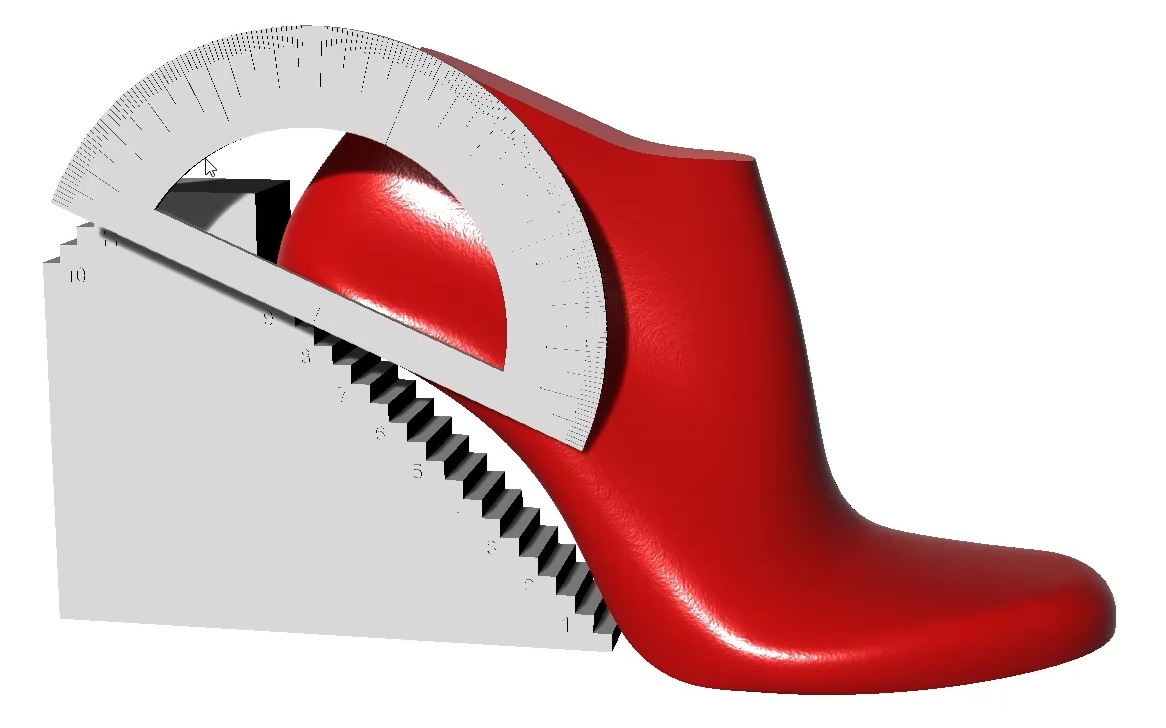
This new gauge is basically a combination of a traditional stepped heel height gauge and an angular dial. The tricky thing I had to overcome when developing it was that the angular readout has to be level with the heel height of the shoe last. I came up with two solutions I like for different reasons, both of which I’m making available.
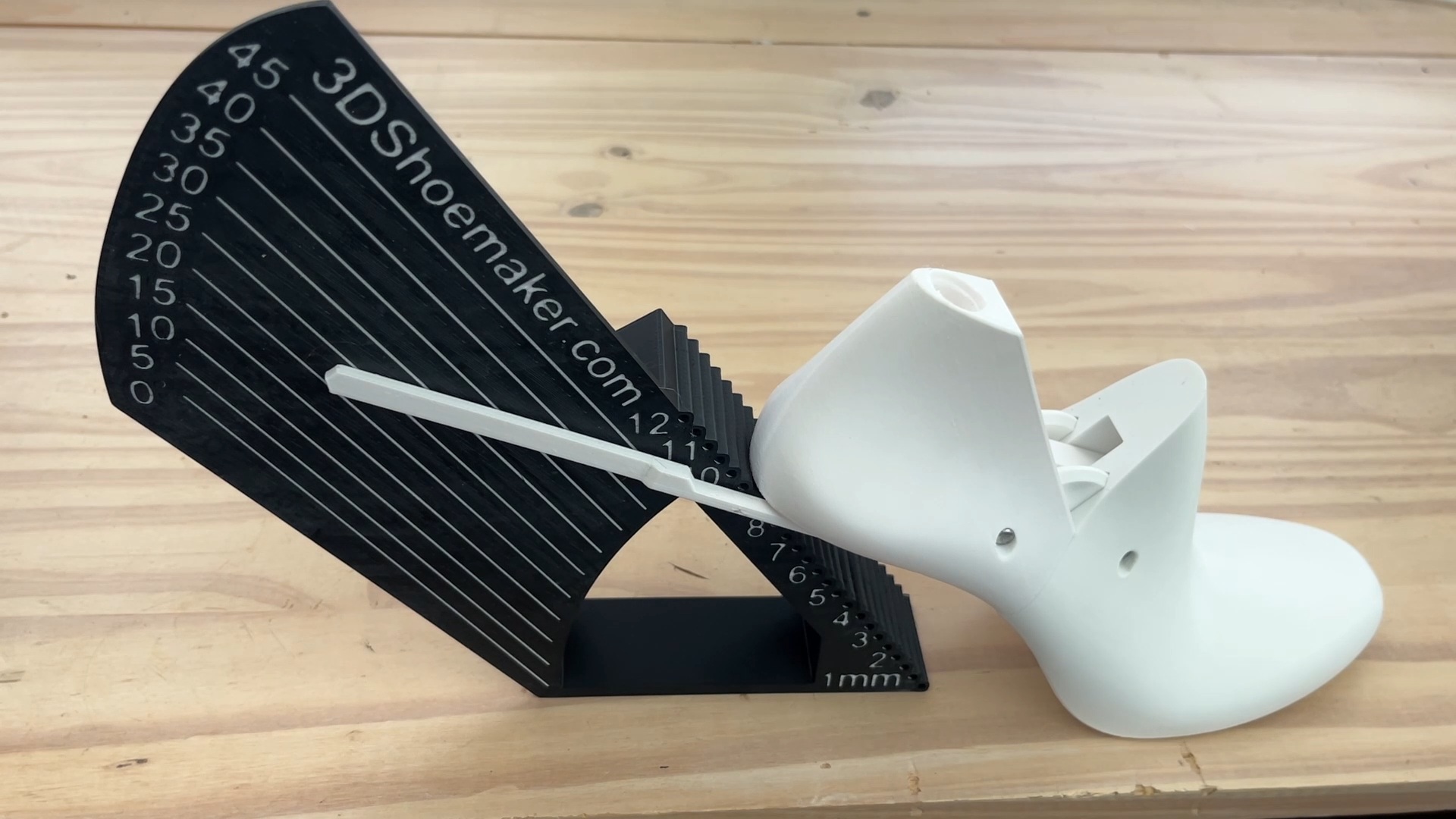
The first solution is a kind of grid. The location where the angular redout is measured changes depending on heel height. So what you do is first check the heel height of the shoe last, then insert the angular pointer into the corresponding heel height hole. Then check what angular measurement line the end of the angular pointer comes closest to, and that is the wedge angle. To keep the grid from getting visually daunting, angular increments are limited to 5°. So you might have to do a bit of interpolation. Another slight downside to this solution is the overall size is bigger than a standard heel height checker. So if you are planning to 3D print one yourself on a small printer with less than the required 220 x 230mm build plate, this first gauge might not be ideal.
The second solution I came up with decouples the angular portion of the gauge from the heel height checker. Once again, you first check the heel height. Then you insert the entire angular gauge rather than just the pointer, which is now permanently crimped to the dial. The dial is then easier to read as it is a simple angular layout with 1° increments. The downside is that there are more moving parts, so it can feel a bit clumsier. But it is smaller, hence why I’ve referred to it as the Compact Wedge Angle and Heel Height Gauge.
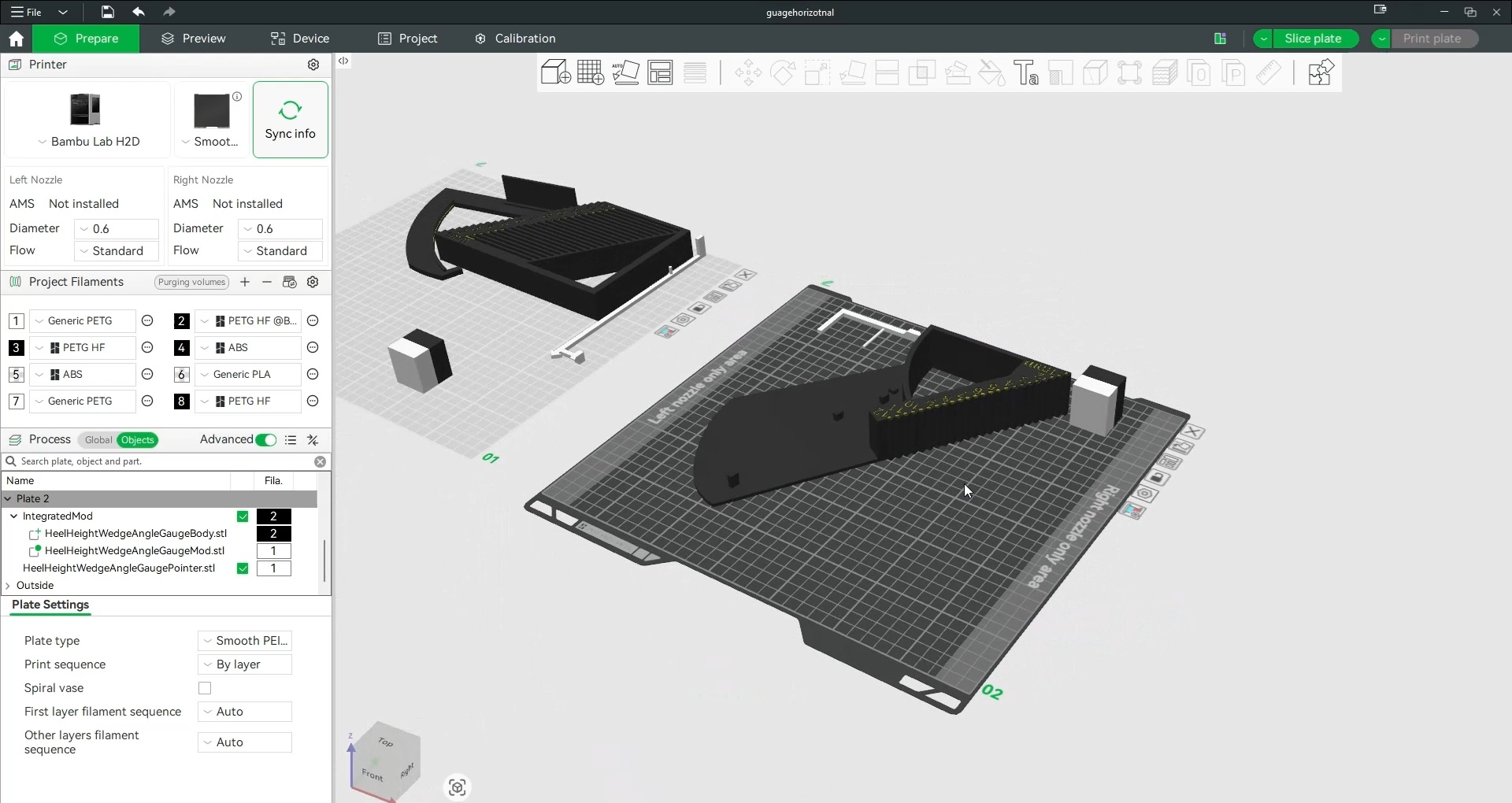
For those 3D printing a gauge themselves, I have a few tips. First I designed the gauges to be printed on their sides. This allows for the best text clarity. The engraved text will show up just fine even if you print in one color. But if you have a multi material capable printer, you can use the modifiers to get a contrasting text color for better readout clarity. The modifier regions are designed so as to minimize filament changes, so something like a Bambulab AMS will work out just fine. Though an H2D like I use yields even less waist. But if your 3D printer doesn’t have any multi material capability at all, you could just manually swap in a different color filament at the right layer height. As far as filament type, I suggest PETG which will be more durable and hold better to the print bed than PLA. Coincidently, I also print shoes lasts and heel components in PETG.
The readouts you get with the Wedge Angle and Heel Height Gauges should be fairly close to what is spec’d for the various shoe lasts on 3DShoemaker.com. This can be checked in the ‘Sizing Info’ section on the product pages. It’s interesting to look at the various extremes, from high heel shoe lasts to cowboy boot shoe lasts. Wedge angle really does have a big impact on both the function and aesthetics of the eventual footwear built on the shoe last. Perhaps in a future post I’ll get more into wedge angle, the formulas for calculating it, and the relevant studies I’ve come across. And I should probably also cover toe spring, which is of course very related.