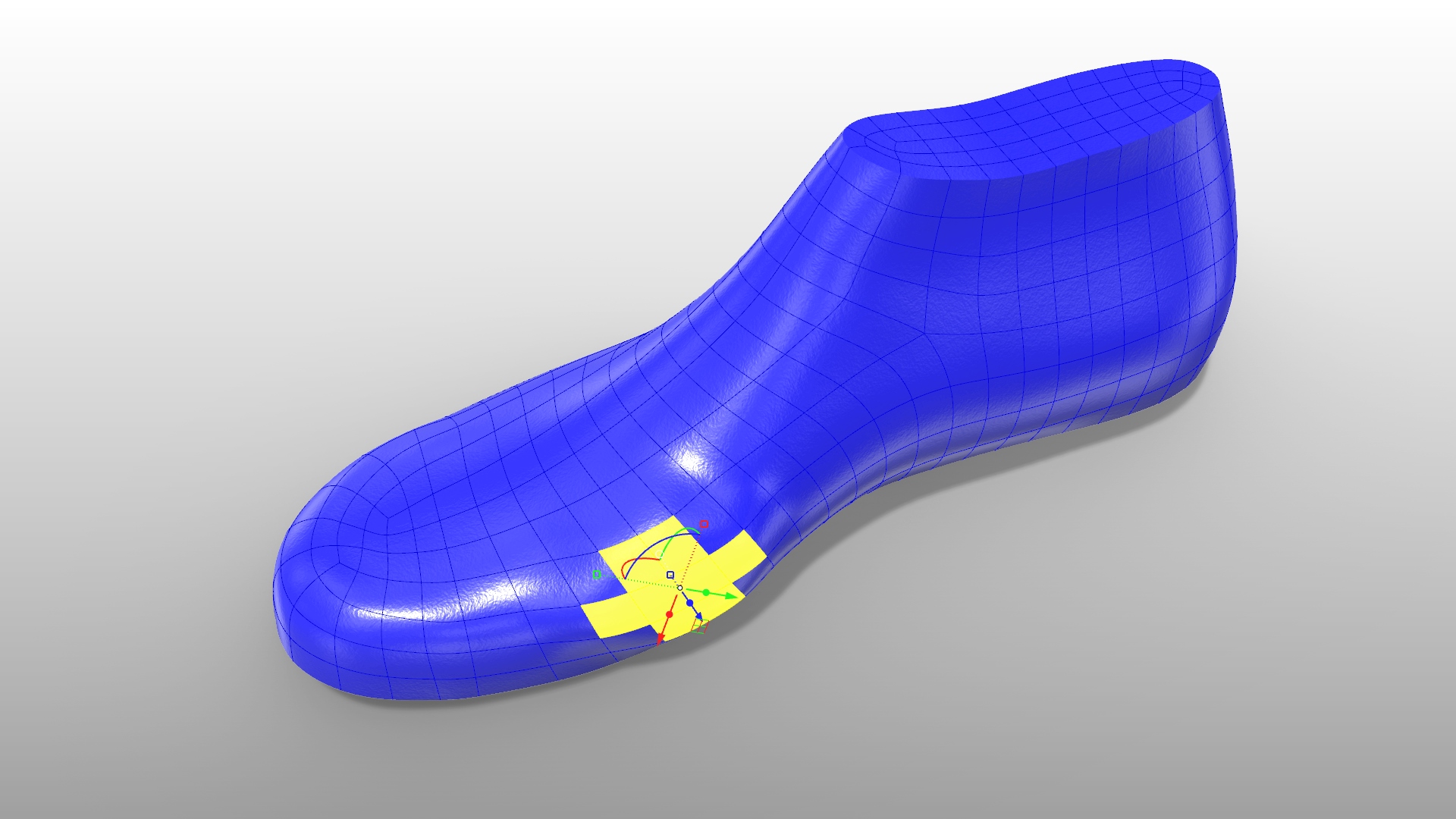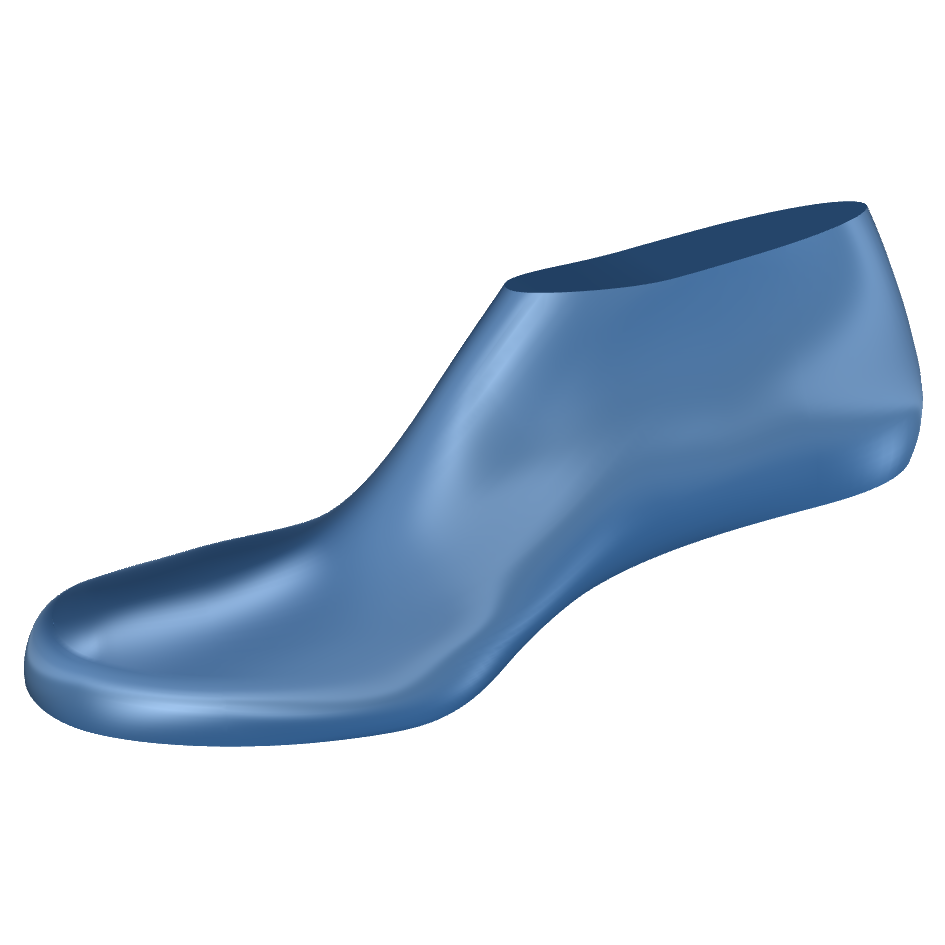
In this 3DShoemaker video, I’m going to show how supplements, which resemble orthotic insoles, can be created in conjunction with trimmed shoe lasts. This combination of shoemaking elements is often used for true custom orthopedic shoemaking. The workflow I’ll demonstrate also employs automated digital vacuum forming and is exceptionally fast while still respecting the intended aesthetics of the eventual footwear. I’ll also cover how supplements like these could be 3D printed.
Supplements for orthopedic shoemaking are essentially what is otherwise referred to as a foot orthotic, insole, or footbed. What differentiates supplements is that they are typically paired with a shoe last that has been trimmed by the footbed surface. So together they form the entirety of the conventional shoe last volume. The lasting process, where the upper is pulled around the shoe last, is then done instead around both the shoe last and the supplement. Then it is only the shoe last that is removed and the supplement remains as a structural part of the shoe rather than as an insert. This is sometimes the preferred approach when making custom orthopedic footwear.
For standard size shoe lasts, this configuration has been possible for quite a while now in the 3DShoemaker ecosystem. On the website, all one needed to do was to choose the option to trim the shoe last by the footbed surface and pair this with an insole order.
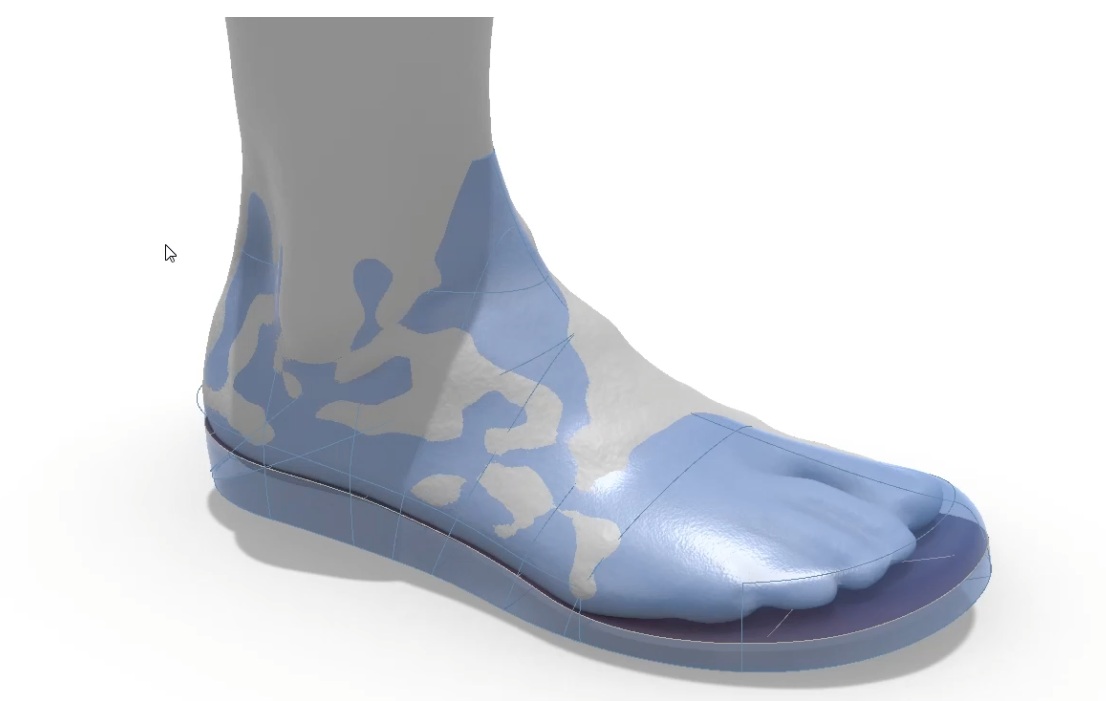
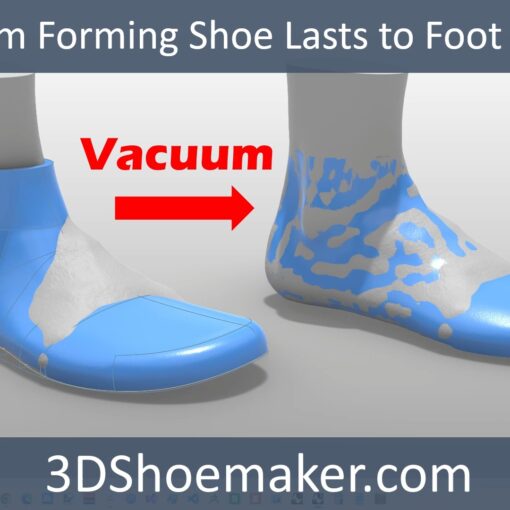
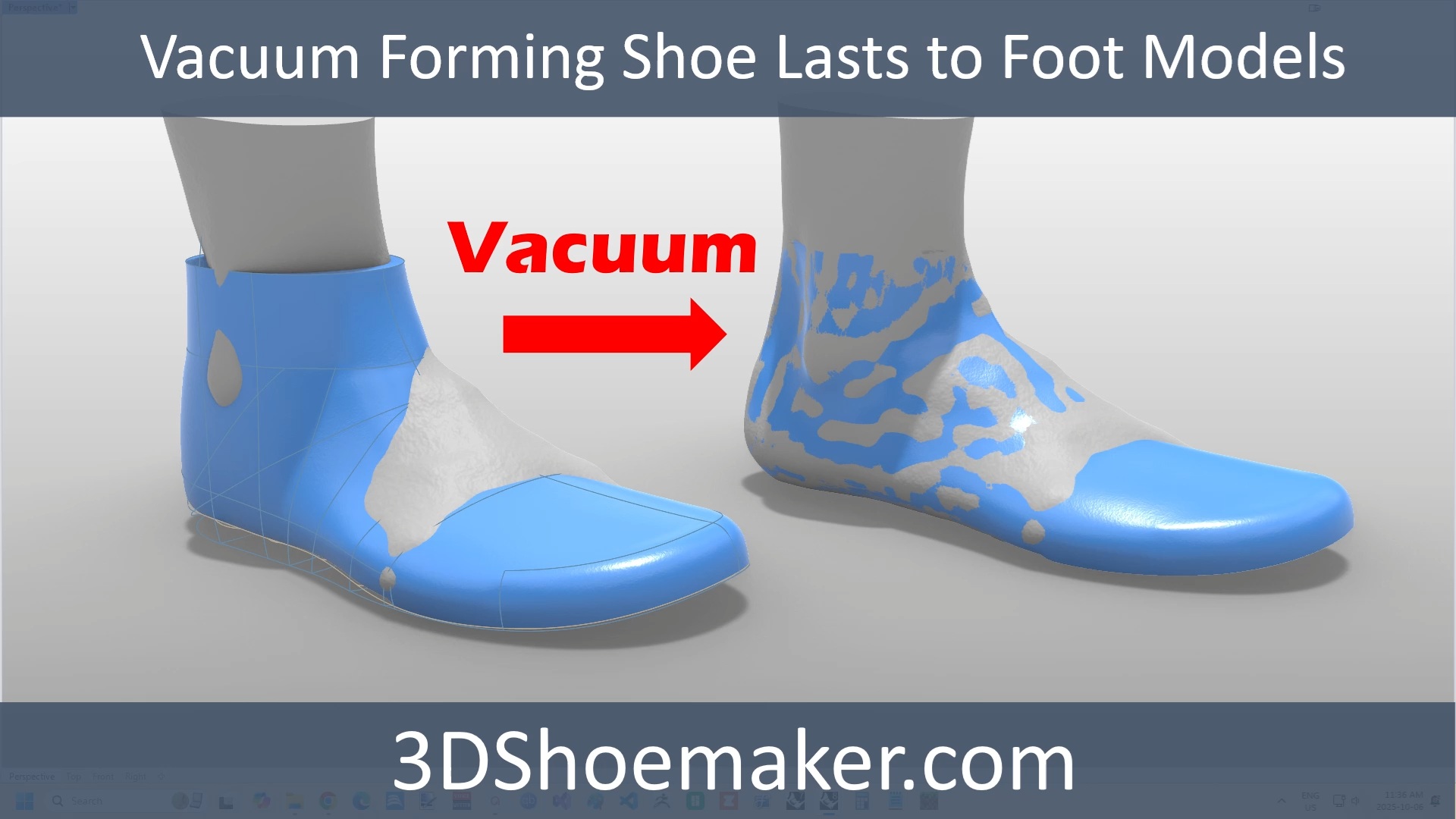
But what is only possible recently is the ability to do this with shoe lasts and footbeds that have been highly customized via vacuum forming and sculpting. This high degree of customization is often necessary for handling challenging orthopedic cases, and that is exactly when lasting over supplements is done. To achieve this, the follow workflow can be used:
- Import 3D Foot Model
- Build Shoe Last and Footbed
- Make Parametric Adjustments to Base Shape
- Vacuum form and Sculpt Shoe Last
- Vacuum form and Sculpt Footbed
- Make Supplement Trim Shoe Last by Footbed Surface
- Any Additional Steps
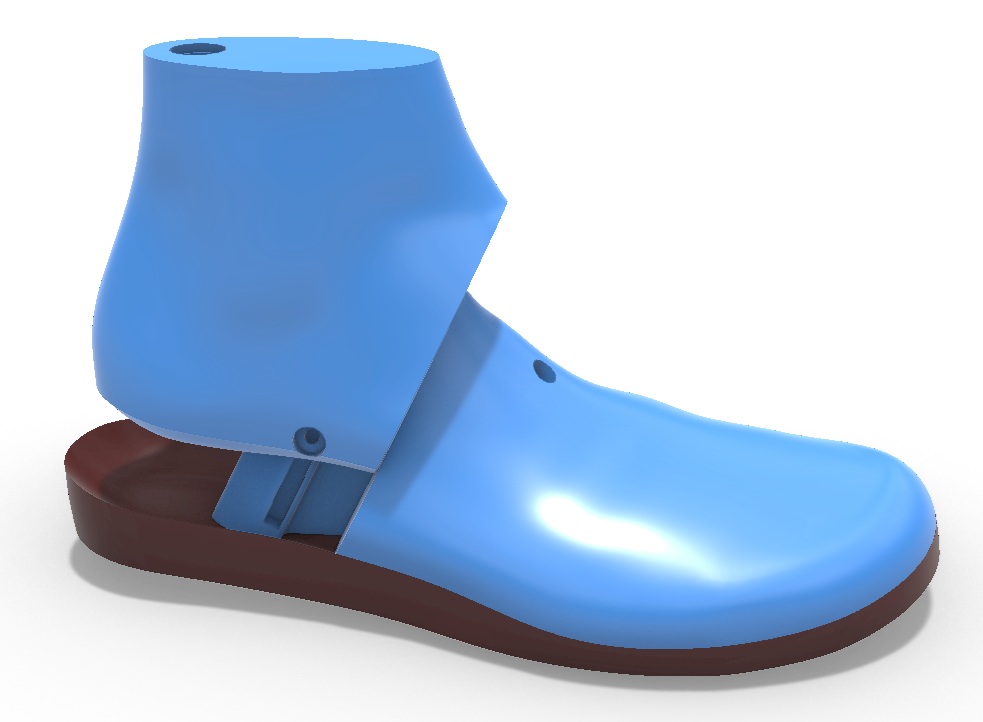
By following these steps, a shoe last and supplement combination can be achieved. What makes this workflow perhaps advantageous to alternatives out there is just how fast it can be carried out, all while closely following foot geometry where necessary but without compromising too much on the base shape. This should both help bring down the cost of true custom orthopedic footwear and allow for closer adherence to intended style and aesthetics.
Once the supplement design is complete, the next step of course is fabrication. Conventionally, this would be done by physically vacuum forming EVA or other materials to a positive mold combined with manual cutting and grinding. More modern approaches make use of CNC machining. But, given how far along 3D printing has come, this might now be the best approach. Flexible materials like TPU could be used. Foaming TPU in particular seems like the best option to me. With less visible layer lines and a better texture, it feels less like a prototype than standard TPU. And the inherent porosity will be better for gluing. I’ll link to some foaming TPUs in the description. For print angle, I suggest orienting at a steep angle, somewhere around seventy degrees. And for support material, you could use PLA for easy removal. Alternatively, I’ve developed a kind of encapsulated skirt support which can be printed with the same material and is easy to remove. I previously demonstrated this for 3D printing insoles.
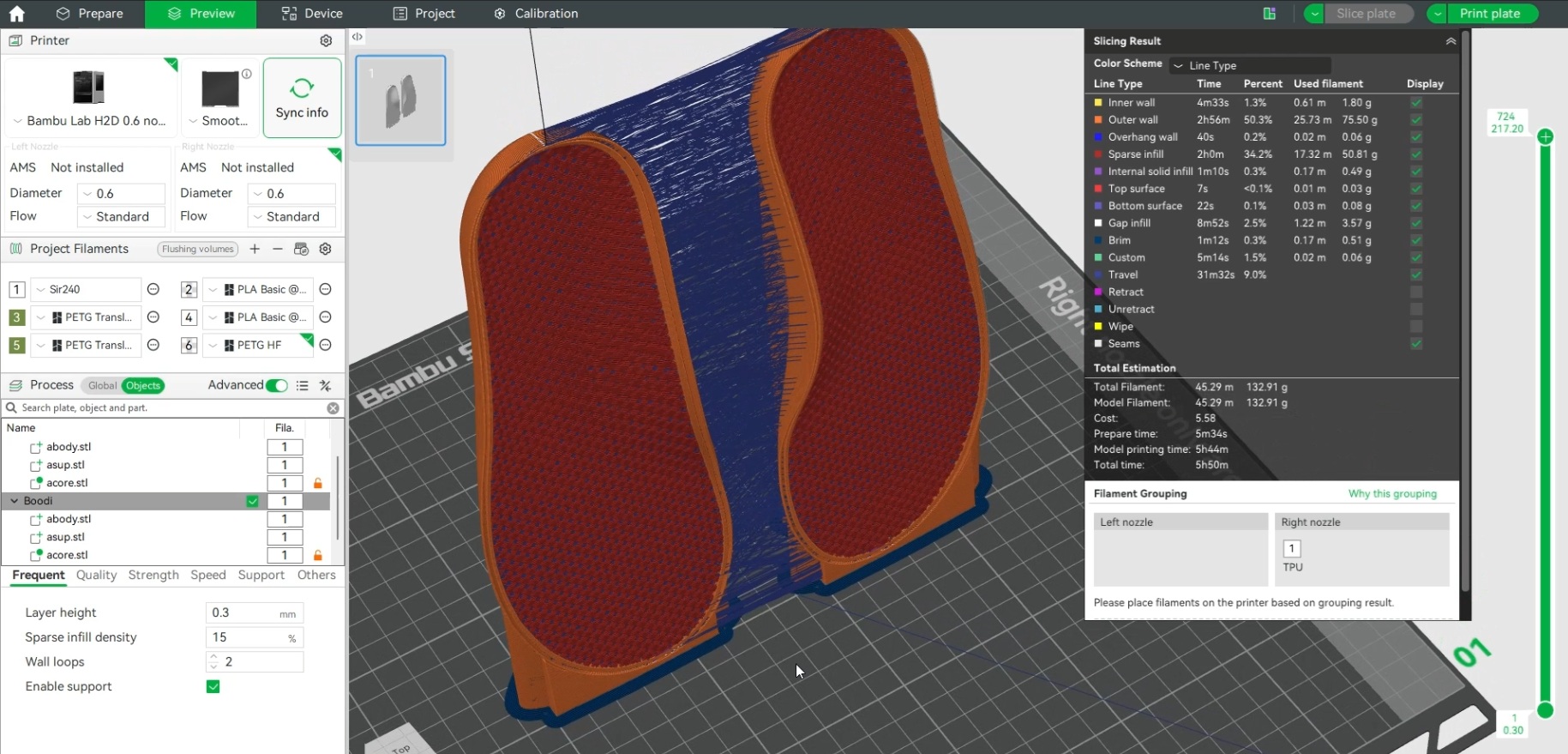
All that being said, I haven’t done any real world testing with any of this yet, so I can’t make any guarantees about safety and efficacy. Rather, I’m just providing the geometrical tools to carry out what others have suggested a need for. One orthopedic shoemaker in particular made this request for a rapid supplement design workflow. I’m always eager for this kind of input and do my best to incorporate it. So please do let me know. That’s all for this 3DShoemaker video. If you found it useful, please like and subscribe to the channel and hit the bell to receive notifications of future updates. Thanks for watching.